
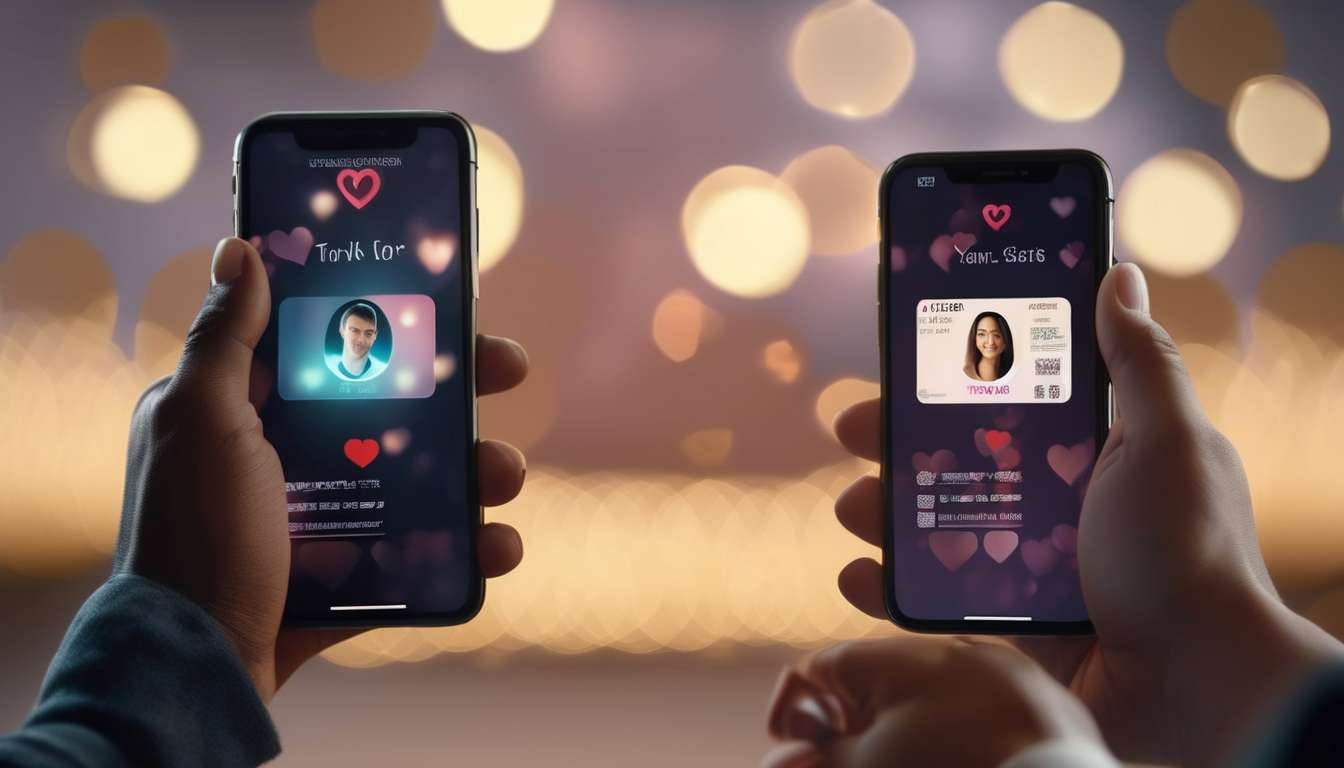
For every swipe that promises connection, we compare safety to convenience and find the balance shifting uneasily.
We have built platforms where adults seek meaningful relationships, yet we constantly weigh rigorous profile verification against user friction and privacy concerns.
In our efforts to protect users, we contrast manual identity checks with automated verification technologies, scrutinizing how each method affects:
- trust
- inclusivity
- onboarding speed
We contrast robust document-based verification with biometric and social-graph signals, questioning which combinations:
- deter bad actors
- avoid alienating genuine members
We compare transparency about verification levels with potential reputational risks for users.
Throughout this article, we examine these trade-offs from both operational and ethical angles, proposing pragmatic verification practices that:
- honor user autonomy
- prioritize safety
By framing profile verification as a set of deliberate contrasts, we aim to guide operators toward balanced, accountable, and user-centered policies that strengthen responsible adult dating ecosystems.
Verification Philosophy
We believe verification should balance user safety, privacy, and usability to build trust without creating unnecessary friction.
We center our approach on creating a welcoming space where members feel seen and protected.
We use identity verification thoughtfully, so people can connect with confidence while feeling their personal boundaries are respected.
We prioritize privacy-preserving onboarding that minimizes data collection and stores only what’s essential, so inclusion doesn’t come at the cost of exposure.
We incorporate biometric liveness checks sparingly and transparently.
- We explain why biometrics are used.
- We offer alternatives for people uncomfortable with biometric methods.
We design flows that are quick, accessible, and supportive.
- We give clear guidance.
- We provide sensible fallbacks to avoid excluding anyone.
We treat verification as a community-building tool, not a gate.
- We ensure everyone understands how checks protect against impersonation and abuse.
We continuously review our methods with user feedback and independent audits.
- We update practices so verification stays effective, respectful, and aligned with values of belonging and consent.
Identity Proof Options
We offer multiple proof options so members can choose the method that best fits their comfort, device capabilities, and privacy needs.
- Options include:
- Government ID upload with redaction tools.
- Document chip checks for compatible devices.
- Attestations from trusted community referees.
- Low-friction selfie match with optional biometric liveness checks for higher assurance.
- A purely document-based route for those who prefer not to use camera features.
We present clear, choice-driven pathways for identity verification so everyone feels welcome and in control.
- Users can select the pathway that balances convenience, device capability, and privacy.
- Trade-offs are explained simply so people can pick the level of assurance matching their safety needs and desire for community.
Our workflows emphasize privacy-preserving onboarding.
- Principles include:
- Minimal data retention.
- Client-side redaction whenever possible.
- Selective disclosure so members share only what’s needed.
We keep verification badges meaningful by tying them to completed steps, not social pressure.
- Badges reflect completed verification steps and the chosen assurance level.
- Clear support is offered for:
- Users who need alternatives.
- Those with accessibility concerns.
Biometric Approaches
We evaluate biometric approaches that balance user convenience, accuracy, and privacy so members can choose secure, understandable ways to prove they’re real.
We recommend methods that combine clear identity verification with minimal friction so people feel welcomed, not scrutinized.
Facial checks and voice samples can be effective when paired with robust liveness checks to prevent deepfake or replay attacks.
We favor systems that perform on-device matching and ephemeral data handling to reduce central storage risks.
We prioritize privacy-preserving onboarding:
- Templates that explain what’s collected, why, and how long it’s retained.
- Consent flows that let members opt into verification levels.
- Cryptographic techniques such as hashing or secure enclaves to limit exposure.
We design fallback paths for those uncomfortable with biometrics to ensure inclusion.
We treat verification as a trust-building step, not a gate:
- Provide clear explanations and transparent controls over identity verification outcomes.
- Offer alternatives and minimal-friction options so members can connect confidently.
- Maintain strong protections for sensitive biometric data throughout the process.
Social Graph Signals
We assess social graph signals to understand users’ real-world connections and behavior patterns, using them to strengthen trust without overreaching into people’s private networks.
We use mutual connections, interaction histories, and shared group affiliations as contextual clues that complement identity verification and biometric liveness checks.
By correlating these signals with consented profile data, we can highlight likely genuine accounts and surface anomalies needing review.
We prioritize approaches that welcome users into a community while protecting their dignity and autonomy.
That means combining social graph insights with privacy-preserving onboarding flows so newcomers feel safe and existing members feel connected.
We avoid blanket assumptions from sparse networks, instead weighting signals by:
- Recency
- Reciprocity
- Demonstrated behavior
Operationally, we flag suspicious clustering, inconsistent histories, or abrupt network changes for human review rather than automatic removal.
In doing so, we balance safety and belonging: reinforcing trustworthy ties while keeping pathways open for authentic new connections.
Privacy and Data Minimization
We limit data collection to what’s strictly necessary, retain it only as long as it serves clear safety and service purposes, and give users straightforward controls over what’s shared and deleted.
We design identity verification to confirm authenticity without hoarding attributes: minimal name, age confirmation, and a transient verification token suffice for ongoing trust signals.
When biometric liveness checks are needed, we use ephemeral processing and discard raw images immediately, keeping only a cryptographic proof that the check passed.
Our privacy-preserving onboarding choices let everyone join confidently, knowing sensitive data isn’t repurposed for profiling or advertising.
We publish retention schedules and provide user data controls:
- Users can request deletion or export of limited records.
- We log access to sensitive fields so people can see who viewed their info.
By combining targeted data collection with clear user controls and accountable handling, we build a respectful space where verification strengthens belonging instead of undermining it.
Usability and Onboarding
We prioritize smooth, guided onboarding that gets users verified quickly without sacrificing safety or privacy.
We walk new members through each step with clear prompts, friendly language, and progress indicators so they feel welcomed and know what to expect.
We minimize required inputs, offer contextual help, and allow users to pause and resume without losing progress, reinforcing belonging and trust.
We use identity verification workflows that balance rigor and ease:
- Concise document capture.
- Optional selfie checks.
- Lightweight biometric liveness when appropriate.
We explain why data’s needed and how it’s used, so people feel respected rather than scrutinized.
We build privacy-preserving onboarding by default — including:
- Data minimization.
- Local processing where feasible.
- Short retention windows.
- User controls for sharing and deletion.
We test flows with diverse users to remove friction, reduce false rejections, and ensure accessibility.
Our goal is a verification experience that’s fast, transparent, and inclusive, helping members connect confidently.
Fraud Detection Workflows
We combine automated signals and human review to detect scams, fake profiles, and suspicious behavior while minimizing false positives.
Key components of detection:
- We tune machine learning models on behavioral patterns, message signals, and profile anomalies.
- Edge cases are routed to trained reviewers who respect dignity and context.
- Workflows integrate identity verification checkpoints with biometric liveness where appropriate to balance strong assurance with user comfort.
Escalation and response paths prioritize support for people seeking connection.
- Flagged accounts receive clear, timely actions:
- Temporary holds
- Gentle verification prompts
- Immediate removal if harm is likely
Privacy-preserving onboarding and accountability are central.
- We embed methods that let users prove authenticity without exposing unnecessary data.
- Decisions are logged for auditability and continuous improvement.
Continuous refinement through testing and community feedback.
- We run regular red-team exercises.
- We maintain feedback loops with community moderators to refine detection thresholds.
Outcome: By combining technology, human judgment, and respectful processes, we create a safer space that welcomes genuine members while firmly rejecting predatory or deceptive actors.
Transparency and User Controls
We’ll give users clear control over what data they share and transparent explanations of how verification affects their experience.
We explain identity verification steps in plain language, describe why biometric liveness checks are used, and show what stays private.
We’ll let members opt into different verification tiers so they choose how much proof they provide, and we’ll display visible status badges tied to those choices.
We’ll provide a compact dashboard where people can manage consents, revoke permissions, and download logs of verification events.
We’ll use privacy-preserving onboarding techniques to minimize data exposure while maintaining trust.
- Examples of techniques:
- Hashed identifiers
- Local device checks
- Minimal data transfer to third parties
We’ll publish a short, readable policy about retention, third-party access, and redress options if verification fails.
We’ll invite feedback from the community, iterate on controls, and commit to clear timelines for deleting or anonymizing data.
By doing this, we help everyone feel safe, respected, and included while keeping fraud low and connections genuine.
How does the platform handle verification for users with non-binary or culturally specific name formats that don’t fit standard identity document fields?
How we handle verification for users with non-binary or culturally specific name formats
We accept flexible name fields.
We allow names that don’t fit rigid first/middle/last formats so users can enter names in the order and form that reflect their identity.
We request clarifying documentation or self-attestation when needed.
- If a submitted name doesn’t match standard ID fields, we may ask for supporting documents that show the name in the user’s preferred format.
- We also accept self-attestation statements explaining the name format or cultural naming convention.
We let users provide preferred names and pronunciations.
- Users can supply a preferred display name separate from their legal name.
- Users can provide name pronunciations (phonetic guides or audio) to reduce misgendering and mispronunciation.
We anonymize sensitive data.
- Sensitive name information is masked or pseudonymized in systems where full legal names aren’t necessary.
- Access to raw identity data is restricted to authorized personnel only.
We involve human reviewers when automated systems fall short.
- Automated verification handles common cases, but edge or culturally specific cases are escalated to trained human reviewers to avoid incorrect rejections.
We prioritize inclusivity while maintaining safety and fraud prevention.
- We balance respect for diverse naming practices with risk controls that deter fraud.
- Verification exceptions for name formats are coupled with other checks (document validation, behavioral signals, contextual risk assessments) to maintain platform safety.
Summary: We combine flexible name entry, optional documentation or self-attestation, preferred-name support, data anonymization, and human review to verify users whose names don’t fit standard ID fields — aiming to be inclusive without compromising security.
What processes are in place for users who need verification but lack any government-issued ID (e.g., refugees or undocumented individuals)?
We’re asking how users without government IDs—refugees or undocumented people—can be verified.
Alternative verification paths can include:
- Community vouching: trusted community members confirm identity and reputation.
- NGO or shelter attestations: letters or digital confirmations from recognized humanitarian organizations or shelter staff.
- Utility or aid documentation: recent bills, aid distribution records, or enrollment in assistance programs.
- Live video checks with trained staff: brief, consented video calls with staff trained in trauma-informed practices to confirm a person’s presence and intent.
Privacy and dignity are central.
- Minimize data collection: collect only what’s necessary and store it securely.
- Allow choice: let users pick the verification path they’re most comfortable with.
- Consent and transparency: explain how information will be used, who can see it, and how long it’s retained.
Trauma-informed and inclusive processes.
- Training staff: ensure verifiers understand cultural sensitivity, trauma responses, and non-coercive communication.
- Flexible, low-pressure interactions: allow breaks, use written or audio options, and avoid requiring recounting traumatic events.
- Appeals and support: provide an easy way to ask for help or challenge a decision, and link to legal or social services when appropriate.
Goal: include everyone safely while minimizing barriers.
- Balance safety and accessibility: design checks that reduce fraud risk without excluding vulnerable people.
- Iterate with community feedback: test options with affected communities and adjust processes to improve trust and effectiveness.
Are there accommodations for users with disabilities that affect their ability to complete biometric or photo-based verification (e.g., mobility impairments, visible scars, or facial paralysis)?
We recognize the Current Question asks about accommodations for users whose disabilities affect biometric or photo verification.
Alternatives offered:
- Human-reviewed uploads.
- Assisted verification sessions.
- Token-based methods that respect privacy.
Staff training and documentation:
- Train staff in accessible practices.
- Allow medical or advocacy documentation to support accommodations.
Support and communication:
- Provide clear help channels for users seeking accommodations.
- Work with users to find dignified, secure options so everyone feels welcome, safe, and fairly verified.
Conclusion
You’ll want a verification approach that balances safety, privacy, and ease.
Offer choice to reduce fraud and keep onboarding smooth:
- ID checks
- Biometrics
- Social signals
Minimize data collection, be transparent, and give users control.
Layer automated detection with human review to catch edge cases.
Ultimately, a respectful, privacy-forward verification system will:
- Build trust.
- Improve user experience.
- Support a healthier adult dating community.